Nicholas Clooney

Timeline / Months

April 2026

48 entries in this month.

Nicholas Clooney

blog: The Brain That Grew — Then Shrunk: What I Just Discovered

I published The Brain That Grew — Then Shrunk: What I Just Discovered, a long-form note that starts from a Cleo Abram YouTube Short and then follows the research on human brain evolution, the unexpected Holocene shrinkage, and the idea that culture may have taken over part of the cognitive load. It is the kind of rabbit hole post I like writing here: one short video, a lot of reading, and a sharper takeaway than I expected.
Nicholas Clooney

wip: ProjectSpire iOS card library foundations

I’ve been working on ProjectSpire’s iOS app (codename: Neow’s Cafe) in NicholasClooney/ProjectSpire as a 1:1 Slay the Spire 2 card library, and the useful part is not just the filtering UI and refactor cleanup, but the way I’m trying to work with AI.

I get better results when I lay down the foundations myself first, especially around quality, guard rails, and how the data is modeled, and then let AI work inside that framework instead of asking it to define the framework for me. It also helps a lot when I have AI propose higher-level API or contract changes before it starts making edits.

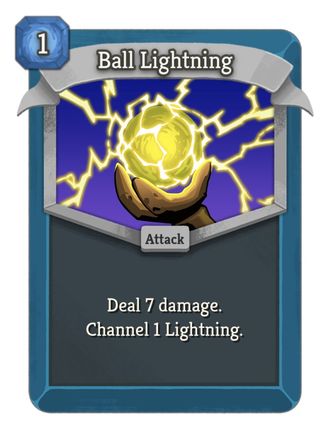
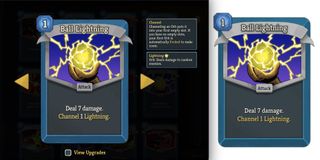
Here's a snapshot of the visual changes. There is also quite a bit of non-visual work too, like reorganizing the source files into clearer areas such as App, Components, Models, Views, Logic, and Dependencies, splitting the banner text into its own component, moving the app toward injected dependencies instead of hardcoded wiring, and a few other things.

...and the changes can be found here on GitHub

Nicholas Clooney

bite: SwiftUI components library demos

I shipped d60e0e1 in SwiftyBites with a new SwiftUIComponentsLibrary area for pickers, menus, search scopes and tokens, and width-showcase layouts.

The useful part is not just the snippets themselves, but that AI agents researched the best practices, produced the example code, organized the project, and left me with a runnable playground where I can compare equal-width stacks, GeometryReader, PreferenceKey, and some surprisingly similar results against my actual needs.

Nicholas Clooney

blog: The Confident Lie: What AI Got Wrong About @ViewBuilder

I published The Confident Lie: What AI Got Wrong About @ViewBuilder, a SwiftUI debugging note that came out of the ProjectSpire card view work. It captures a small but useful lesson: body gets @ViewBuilder from the View protocol, but a custom computed some View property needs the annotation explicitly if I want an if without an else. The compiler was right, the AI was overconfident, and now the mistake is written down somewhere I can find again.

Nicholas Clooney

wip: ProjectSpire extracted card model

I’ve moved the SwiftUI card view forward by adding a real Card model, so even though the screen does not look dramatically different yet, the app is much closer to rendering cards from extracted data instead of hardcoded values. There is even a small visual regression in the golden text compared with the previous screenshot, but the important change is underneath: I can now refine the card parser and JSON output models, bring those records and required images directly into the app, and aim to emulate any card regardless of rarity, type, or data shape. The relevant work is in the ProjectSpire compare for the card view changes and the new card model.

Updated SwiftUI Slay the Spire 2 card view powered by an extracted card model
New Card model version.
Previous comparison of a Slay the Spire 2 card in the game and the earlier SwiftUI card view
Previous visual pass for comparison.
Nicholas Clooney

thoughts: Timeline as a permanent record

I’m really happy that I built the timeline feature into my blog, because it gives me an easy way to write about little moments and keep them somewhere permanent, platform agnostic, and accessible without any kind of paywall or login wall. The ProjectSpire SwiftUI card view WIP entry is exactly the kind of thing I wanted this for: a small progress record I can send to friends and family without needing it to be a full post or trapped inside a social feed.

Nicholas Clooney

wip: ProjectSpire SwiftUI card view

I’m recreating the Slay the Spire 2 card view in SwiftUI with assets extracted from the game, and I’m very happy with how close the first pass feels. The current work is captured in ProjectSpire snapshot/2026-04-28, especially CardView.swift; most of it is still hardcoded, but the visual foundation is there. Next I want to generalize it so the view can take a card data object and dynamically reload the text, colors, and assets, which might eventually turn into a Slay the Spire wiki app for the phone.

Comparison of a Slay the Spire 2 card in the game on the left and a matching SwiftUI card view on the right
Nicholas Clooney

note: Localization Formatters - Slay The Spire 2 Research Note

I published Localization Formatters - Slay The Spire 2 Research Note, a ProjectSpire note on how card localization formatter functions such as diff() are resolved and applied. GPT-5.5 researched and wrote the note, and I am honestly amazed by how well and how quickly it produced a detailed explanation from decompiled sources in minutes. This is exactly the kind of agent-assisted research loop that makes ProjectSpire feel much more possible.

Nicholas Clooney

blog: Three ways to pass an @Observable object in SwiftUI

I published Three ways to pass an @Observable object in SwiftUI, a short SwiftUI reference for choosing between environment injection, direct initializer passing, and @Binding. It keeps the distinction focused on ownership and coupling: whole-object reference sharing when the child is allowed to know the model, or a projected binding when the child should only see one value.

Nicholas Clooney

bite: Async debounce demo in SwiftyBites

I pushed 1263f2d to SwiftyBites as a Friday-night AsyncDebounceDemo for playing with Swift's async and sync edges. The demo compares a view-owned async .task flow with a synchronous button action that cancels and restarts a stored Task, which makes the debounce mechanics feel a lot more concrete than just reading the pattern.

Nicholas Clooney

blog: SwiftUI .task(id:) debounce update

I updated SwiftUI in the Wild: Memory, Concurrency, and the Gaps in the Docs with a clearer explanation of using .task(id:) for debounced work. The change moves that pattern into the debounce section, where SwiftUI's automatic cancellation model fits naturally, and keeps the button-action section focused on manual task ownership tradeoffs.

Nicholas Clooney

blog: SwiftUI in the Wild: Memory, Concurrency, and the Gaps in the Docs

I published SwiftUI in the Wild: Memory, Concurrency, and the Gaps in the Docs, a field guide to the parts of modern SwiftUI + concurrency that look clean in isolation but get messy in real apps. The post covers @State + @Observable lifetime bugs, debouncing with async/await, task ownership in views and buttons, closure capture cycles, and why @Observable and actor pull in different architectural directions.

Nicholas Clooney

wip: ProjectSpire agents, APIs, and card parser work

I’ve been working since last night and today with agents to document how Slay the Spire 2 works, prototype a Spire API and a REST API on top of it, and shape a WIP card parser that turns C# into JSON structures. That work is captured in ProjectSpire snapshot/2026-04-19, which gives me a concrete snapshot of the game model and tooling so far.

Nicholas Clooney

feature: Collapsible Markdown code blocks (subspace)

Shipped GitHub-style collapse and expand controls for long Markdown code blocks in v1.27.0 of 11ty-subspace-builder. The release also reuses that shared copy-and-collapse behavior for regular fenced code blocks, which keeps the interaction consistent instead of treating Markdown blocks as a separate case.

Nicholas Clooney

blog: The Accelerated Speed of Creation

Published The Accelerated Speed of Creation, a reflection on how much faster the path from thought to shipped artifact has become with coding agents handling the translation layer around writing, blog workflow, and routine Git operations. I also kept the earlier Encoding My Blog Workflow for Coding Agents draft as a note rather than a post, because it was useful and concrete but still did not meet my standard for what the real piece needed to be.

Nicholas Clooney

feature: Theme mode control and delayed previews (subspace)

Shipped theme mode control and delayed previews in v1.25.0 of 11ty-subspace-builder. The new theme switch adds explicit auto, light, and dark modes instead of treating the site theme as a hidden implementation detail, and delayed previews make hover previews configurable so they feel less jumpy when moving around a page.

Nicholas Clooney

blog: rtc-bridge — TCP tunneling from a browser, explained

rtc-bridge — TCP tunneling from a browser, explained is up. I wrote down the WebRTC signaling path, the node/coordinator/browser split, and the auth gap I think matters most before anyone uses it for sensitive services. I also compared it to my Tailscale + Caddy setup so the trade-offs stay concrete.

Nicholas Clooney

blog: Getting Pulled Into the Ethereum Ecosystem

I published Getting Pulled Into the Ethereum Ecosystem (From a Digital Garden Perspective) after a 3am rabbit hole with Andrew about Ethereum, trust models, and what a markdown blog can borrow from a ledger. It is less a crypto post than a thinking-out-loud piece about verification, shared state, and the difference between controlling a history and publishing into one. I’m treating it as the first step toward a small on-chain/off-chain experiment rather than a full web3 shift.

Nicholas Clooney

feature: Published the first threaded timeline update

Published the first follow-up entry in the new threaded timeline model.

Timeline entries can now point back to earlier entries, which turns the feed into more of a build log than a flat list. This update continues from the original timeline launch and marks the point where parent and follow-up relationships became part of the feature.

The implementation for this lives in PR #17.

Nicholas Clooney

wip: moving the Cloudflare Email Worker into Git

This grows out of Cloudflare Build Notifications via Email Routing and Email Worker, but I’m now moving the Email Worker out of the Cloudflare dashboard editor and into Git in NicholasClooney/cloudflare-email-to-webhook-worker. The goal is to keep the worker version controlled, review changes before deploys, test locally, and configure it with Wrangler instead of only editing it in the Cloudflare web UI. Right now it is still mostly Wrangler init plus the example email worker, but that is a solid foundation to build from.

Nicholas Clooney

feature: Recursive git-activity

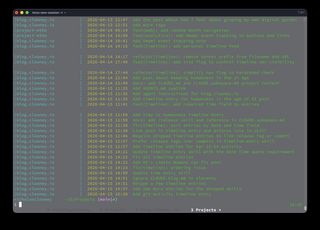
I created git-activity in a631c98 so I can quickly answer "what have I been working on?" It walks a directory tree, finds the Git repos underneath it, and shows the latest log entries from each one in a single pass. It also supports a few filters, which is handy when I only want to review a slice of recent work; for example, from my projects folder I can run:

git-activity -r blog -m feat -x chore

That recursively scans repos, focuses on feature work, and leaves chores out of the list.

Terminal output from running git-activity recursively in the projects folder, matching feat entries and excluding chore entries
Nicholas Clooney

idea: ProjectSpire mod tooling directions

I’m recording the ProjectSpire ideas now even though they’ve been rattling around for a while: an unofficial SpireAPI for mods, a REST layer on top of it, and a voice-command/accessibility layer that could eventually add Whisper-backed recognition and text-to-speech. Writing them down gives me one place to grow the monorepo instead of leaving the ideas scattered in my head.

Nicholas Clooney

thoughts: What's Worth Keeping: On Humanness in the Age of AI

Published What's Worth Keeping: On Humanness in the Age of AI — a post on what I've been thinking about since attending a thought experiment session on AI and skill erosion. It's about the parts of humanness I think are genuinely worth protecting — junior skill-building, critical thinking, forming a view before outsourcing it — and what I actually try to do in my own daily use of AI tools.

Nicholas Clooney

thoughts: Hello, timeline

Starting a captain's log. Shipped things, published writing, half-formed thoughts — all in one place, in order, no categories needed. Let's see how it goes.