I published The Brain That Grew — Then Shrunk: What I Just Discovered, a long-form note that starts from a Cleo Abram YouTube Short and then follows the research on human brain evolution, the unexpected Holocene shrinkage, and the idea that culture may have taken over part of the cognitive load. It is the kind of rabbit hole post I like writing here: one short video, a lot of reading, and a sharper takeaway than I expected.

I’ve been working on ProjectSpire’s iOS app (codename: Neow’s Cafe) in NicholasClooney/ProjectSpire as a 1:1 Slay the Spire 2 card library, and the useful part is not just the filtering UI and refactor cleanup, but the way I’m trying to work with AI.
I get better results when I lay down the foundations myself first, especially around quality, guard rails, and how the data is modeled, and then let AI work inside that framework instead of asking it to define the framework for me. It also helps a lot when I have AI propose higher-level API or contract changes before it starts making edits.
Here's a snapshot of the visual changes. There is also quite a bit of non-visual work too, like reorganizing the source files into clearer areas such as App, Components, Models, Views, Logic, and Dependencies, splitting the banner text into its own component, moving the app toward injected dependencies instead of hardcoded wiring, and a few other things.
The useful part is not just the snippets themselves, but that AI agents researched the best practices, produced the example code, organized the project, and left me with a runnable playground where I can compare equal-width stacks, GeometryReader, PreferenceKey, and some surprisingly similar results against my actual needs.
I published The Confident Lie: What AI Got Wrong About @ViewBuilder, a SwiftUI debugging note that came out of the ProjectSpire card view work. It captures a small but useful lesson: body gets @ViewBuilder from the View protocol, but a custom computed some View property needs the annotation explicitly if I want an if without an else. The compiler was right, the AI was overconfident, and now the mistake is written down somewhere I can find again.
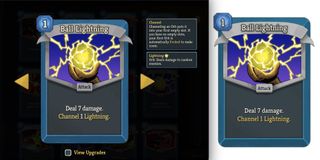
I’ve moved the SwiftUI card view forward by adding a real Card model, so even though the screen does not look dramatically different yet, the app is much closer to rendering cards from extracted data instead of hardcoded values. There is even a small visual regression in the golden text compared with the previous screenshot, but the important change is underneath: I can now refine the card parser and JSON output models, bring those records and required images directly into the app, and aim to emulate any card regardless of rarity, type, or data shape. The relevant work is in the ProjectSpire compare for the card view changes and the new card model.
New Card model version.Previous visual pass for comparison.