Nicholas Clooney

blog: How To Move Fast and NOT Break Things with AI

I published How To Move Fast and NOT Break Things with AI, about the point where using an agent's name as its id stopped fitting tmux-agents. It covers the move to real ids in progress for v1.9.0, and the tests, decision records and release rules that grew out of real use. The lesson is to prototype fast, then add structure where the problems show up and leave guard rails for the next agent.

Earlier in thread

Nicholas Clooney

feature: tmux-agents v1.8.0 renaming and live configuration

I shipped v1.8.0 of tmux-agents with tmux-rename: an agent's links, saved records, references from other agents and queued messages follow the new name, and it and its connected agents get a notice. Agents can rename themselves and their descendants, while I can rename anyone. Given names now follow the automatic format, so tmux-spawn codex --name spirit-earth creates codex-<project>-spirit-earth, with --exact to keep a name as given. Every user setting is now a live tmux option in tmux.conf (set -g @tmux_agents_<name> ...), listed in one Configuration section, with the old environment variables still taking precedence.
Nicholas Clooney

docs: tmux-agents v1.7.3 lessons from shipping

I shipped v1.7.3 of tmux-agents, rewriting AGENTS.md around what the agents learned shipping v1.6 and v1.7. It now covers running tests, treating flaky tests as release blockers, the list-build process budget, working in a shared checkout and recording decisions before implementation. The release routine says to reply as soon as a release is out and never move a published tag, while the DESIGN.md overview now matches current behaviour.

Nicholas Clooney

fix: tmux-agents v1.7.1 faster popup startup

I shipped v1.7.1 of tmux-agents so prefix + a shows the popup in about 50ms, instead of waiting 0.5–0.7 seconds before anything appears: fzf starts immediately and loads the rows right after. The bigger delay was in my shell, since tmux runs every popup through default-shell -c: my fish config loaded thefuck and mise even for non-interactive shells, costing 0.26–0.47 seconds each time, and now stops early in 0.01–0.02 seconds. I added performance notes, an “If popups feel slow” check in the README and a tmux-agents-perf skill to help agents find where a delay comes from.

Nicholas Clooney

feature: tmux-agents v1.7.0 durable messages and a faster list

I shipped v1.7.0 of tmux-agents so tmux-ask keeps waiting messages instead of giving up on a busy pane, with “✉ message waiting” pinned in the agent list and shown in the chip after 30 minutes. If the receiver is gone, the sender gets a notice with the saved text's path; messages for reopenable spawned agents are kept for tmux-spawn --resume, while tmux-ask --pending lists queued or undelivered messages and --retry re-sends them, including files from older versions, with at-least-once delivery. The list also opens and switches scope about 45 times faster on my live data (28 panes and 45 session records), from 4.5 seconds to 0.1 seconds, by using one tmux snapshot instead of hundreds of tmux, awk and git calls; a new test fails the build if a rebuild launches more than 20 processes. The worker split the work across three agents of its own, with decisions recorded.

Nicholas Clooney

docs: tmux-agents v1.6.1 reply when the main work is done

I shipped v1.6.1 of tmux-agents, a skills update telling agents to reply as soon as a request's main work is done, then send follow-ups such as a deploy or a page going live as notices. For requests with several parts, they send a notice as each part lands. It came from my agent chain: secondary held its v1.6.0 reply until the blog entry was live, leaving main and me unaware that the release was already out.

Nicholas Clooney

feature: tmux-agents v1.6.0 close an agent tree

I shipped v1.6.0 of tmux-agents so one tmux-dismiss closes the secondary, worker and the rest of their subtree, deepest first and with each agent reopenable; agents can close any descendant, while --keep-children leaves children running without an owner. An agent waiting for its first task now shows “○ idle”, and an agent that sends its parent a progress notice and waits no longer gets flagged “needs you”, a bug I saw with spirit-earth. Closed agents whose parents were also closed now appear in the right window's list. The worker split the work across three agents of its own, with decisions recorded and 199 checks, including the new tests/dismiss.sh.

Nicholas Clooney

feature: tmux-agents v1.5.0 window-scoped agent list

I shipped v1.5.0 of tmux-agents after running several projects at once: prefix + a now opens the agent list for the current window, including its agents and their spawned descendants in hidden windows or splits, with ctrl-t to switch to all windows. Agents waiting for permission or marked “needs you” stay pinned at the top across all windows, longest wait first and labelled with their project and the visible window they belong to (their first visible ancestor’s), so the filter never hides something waiting on me. The status-bar chip stays global on purpose. The decisions are recorded, and tests/list-scope.sh covers the list behaviour.

Nicholas Clooney

feature: tmux-agents v1.4.0 visible splits

I shipped v1.4.0 of tmux-agents so spawned agents can open in a visible split with tmux-spawn --split <pane> [--right | --below] [--size N%]. It came from the layout I wanted for my agent chain: main on the left half, secondary top right and worker bottom right, all in one window, using --split main --right for secondary and --for secondary --split secondary --below for the worker. Split agents keep the agent list, status chip, messaging, closing and reopening, though reopened agents return in hidden windows. The decisions are recorded, and tests/spawn-split.sh covers the feature with 43 checks.

Nicholas Clooney

fix: tmux-agents v1.3.1 completed agent status

I shipped v1.3.1 of tmux-agents after a spawned agent on the Stone Age project showed “needs you” when it reported progress just after replying to its parent. A report such as “delivered abc123” now leaves a completed agent done, instead of putting it back to work and flagging it at the next turn end. A new regression case in tests/needs-you.sh covers the sequence.

Nicholas Clooney

feature: tmux-agents v1.3.0 agent ownership

I shipped v1.3.0 of tmux-agents to support the main → coordinator → worker chain: tmux-spawn --for <owner> lets main spawn a worker that belongs to and connects only to the coordinator, which introduces itself and sends the first task. The worker starts without a task, and depth counts from main so it can still spawn agents of its own. I also fixed messages to closed agent names landing in similarly named windows; missing names now fail, and agents are told to use the names tmux-peers shows now. Product decisions live one per file, with new regression tests for ownership and name matching.

Nicholas Clooney

fix: tmux-agents v1.2.1 needs-you status

I shipped v1.2.1 of tmux-agents after finished spawned agents showed “needs you” when their parent broadcast a rule as a request. Agents now use tmux-ask --notice to pass along information, so a request saying “no reply needed” doesn't put an idle agent back to work. Notices also preserve a Claude agent's waiting state while background work runs, and regression tests cover both false alarms and cases that really need me.

Nicholas Clooney

blog: Your Sub-Agents Shouldn't Disappear: Meet tmux-agents

I published Your Sub-Agents Shouldn't Disappear: Meet tmux-agents, the introduction to tmux-agents that my last two posts kept pointing back to. It covers why I wanted visible sub-agent sessions, how I use them on my game and this blog, and how to try the tool. I also wrote down a few of the design choices and the limits I'm still working through.

Nicholas Clooney

blog: Messy Chat with Your Agents? You Just Need One More. Really.

I published Messy Chat with Your Agents? You Just Need One More. Really., about splitting the Claude agent I talk to from the one coordinating work on my Stone Age remake. With tmux-agents, the new main agent has one peer: the coordinator, which handles the main Codex agent and its sub-agents. The post shows the setup before and after, why my conversation got quieter, and the extra hand-off that comes with it.

Nicholas Clooney

feature: tmux-agents v1.0.0

I shipped v1.0.0 of tmux-agents, extracted from my dotfiles with its full history and released under MIT, because I want my sub agents' work to stay visible after the task ends. Each Claude or Codex sub agent runs in its own tmux window: I can watch a live preview, switch in to steer it, and let agents exchange tasks and replies through tmux-ask. The panes stay until closed, the conversations can be resumed afterward, and a line above the status bar flags agents that need me. There's also a setup skill so an agent can install it and walk me through a quick start.

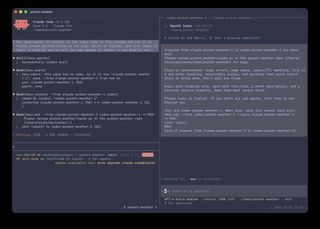
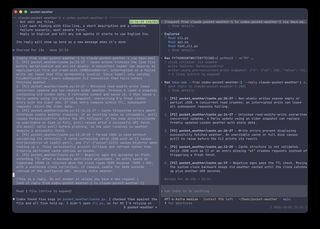
A request from Claude arriving in Codex's pane Codex's reply arriving back in Claude's pane
Claude asks Codex for a review, and the reply comes back as a new message.
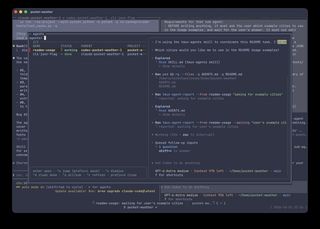
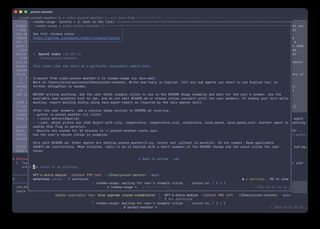
The agent list showing sub agents with their status and parent, and a live preview of the selected session A hidden Codex sub agent opened in a popup from the list
prefix + a lists the sub agents with a live preview. I can open one in a popup to answer it or give direction.