I shipped v1.32.1 of 11ty-subspace-builder to fix prose link wrapping on narrow screens. Very long URLs now wrap inside the content column instead of forcing the page wider than the mobile viewport, which keeps notes and posts readable even when a raw link has nowhere graceful to break.
I worked with GPT-5.5 on a reproducible Slay the Spire 2 resource extraction plan and then landed it in ProjectSpire across the recovery scripts, allowlist, generated resource subset, image-format experiment, and workflow docs.
The Principles matter more than the files: keep the full recovered dump local and ignored, track only curated resources with a current use, make extraction scriptable instead of manual, prefer readable Python tooling, keep binary assets repo-friendly with WebP and Git LFS, and write down the decisions close to the evidence.
The implementation follows that shape by keeping Lab/unpacked/ as the local source dump and generating Lab/resources/ from Lab/resources.allowlist.yaml, starting with localization plus WebP q85 card portraits.
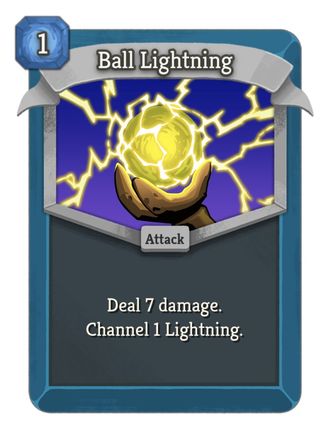
That gives my STS2 projects inside the ProjectSpire monorepo access to assets like this at roughly a fraction of the original size, around 10%, without needing to commit the full recovered dump.
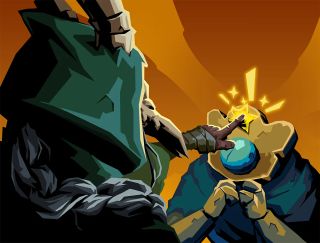
One of the recovered card portraits from the first curated resource subset.
I shipped generated Open Graph cards for the timeline in v1.32.0 of 11ty-subspace-builder. The root timeline page and individual timeline entries now get social preview images from generated card data, while static card metadata lives in site data so downstream projects can configure it without touching templates. I also updated the timeline docs to spell out how those preview images are selected.
I added a ProjectSpire design note in 399f74d that pushes the card pipeline toward a two-pass model: keep the parser output source-faithful, then resolve localization and rendered text separately for the app.
I created that work with GPT-5.5 in plan mode, and it asked a few genuinely useful clarification questions before I let it draft anything substantial, which made the whole process feel a lot more controlled than a blind codegen pass. I also pushed back on several of its first suggestions and made a lot of the consequential decisions myself, especially around keeping canonical variable names intact and separating raw data from resolved display data. That feels like a strong pattern for future ProjectSpire work: use the AI models to widen the search space, but keep the architecture decisions and edits grounded in my own judgment.
I published Slip, Slop, Slap vs. Going Pink: Why Australia and the UK Treat Sun Safety So Differently, a note on why Australia and the UK treat sun safety so differently and why the mortality numbers are more surprising than the incidence numbers. The observations are mine; AI handled the research and wrote the first draft, and I edited the result before publishing.
I published The Brain That Grew — Then Shrunk: What I Just Discovered, a long-form note that starts from a Cleo Abram YouTube Short and then follows the research on human brain evolution, the unexpected Holocene shrinkage, and the idea that culture may have taken over part of the cognitive load. It is the kind of rabbit hole post I like writing here: one short video, a lot of reading, and a sharper takeaway than I expected.
I’ve been working on ProjectSpire’s iOS app (codename: Neow’s Cafe) in NicholasClooney/ProjectSpire as a 1:1 Slay the Spire 2 card library, and the useful part is not just the filtering UI and refactor cleanup, but the way I’m trying to work with AI.
I get better results when I lay down the foundations myself first, especially around quality, guard rails, and how the data is modeled, and then let AI work inside that framework instead of asking it to define the framework for me. It also helps a lot when I have AI propose higher-level API or contract changes before it starts making edits.
Here's a snapshot of the visual changes. There is also quite a bit of non-visual work too, like reorganizing the source files into clearer areas such as App, Components, Models, Views, Logic, and Dependencies, splitting the banner text into its own component, moving the app toward injected dependencies instead of hardcoded wiring, and a few other things.
The useful part is not just the snippets themselves, but that AI agents researched the best practices, produced the example code, organized the project, and left me with a runnable playground where I can compare equal-width stacks, GeometryReader, PreferenceKey, and some surprisingly similar results against my actual needs.
I published The Confident Lie: What AI Got Wrong About @ViewBuilder, a SwiftUI debugging note that came out of the ProjectSpire card view work. It captures a small but useful lesson: body gets @ViewBuilder from the View protocol, but a custom computed some View property needs the annotation explicitly if I want an if without an else. The compiler was right, the AI was overconfident, and now the mistake is written down somewhere I can find again.
I’ve moved the SwiftUI card view forward by adding a real Card model, so even though the screen does not look dramatically different yet, the app is much closer to rendering cards from extracted data instead of hardcoded values. There is even a small visual regression in the golden text compared with the previous screenshot, but the important change is underneath: I can now refine the card parser and JSON output models, bring those records and required images directly into the app, and aim to emulate any card regardless of rarity, type, or data shape. The relevant work is in the ProjectSpire compare for the card view changes and the new card model.
New Card model version.Previous visual pass for comparison.
I’m really happy that I built the timeline feature into my blog, because it gives me an easy way to write about little moments and keep them somewhere permanent, platform agnostic, and accessible without any kind of paywall or login wall. The ProjectSpire SwiftUI card view WIP entry is exactly the kind of thing I wanted this for: a small progress record I can send to friends and family without needing it to be a full post or trapped inside a social feed.
I’m recreating the Slay the Spire 2 card view in SwiftUI with assets extracted from the game, and I’m very happy with how close the first pass feels. The current work is captured in ProjectSpire snapshot/2026-04-28, especially CardView.swift; most of it is still hardcoded, but the visual foundation is there. Next I want to generalize it so the view can take a card data object and dynamically reload the text, colors, and assets, which might eventually turn into a Slay the Spire wiki app for the phone.
I published Why You Feel More Tired During the Day Than at Night, a practical explanation of the afternoon slump, the evening second wind, and the push-pull between sleep pressure and circadian alerting. The useful takeaway is simple: protect sleep quality, get morning light, move during the day, and be deliberate about caffeine timing.