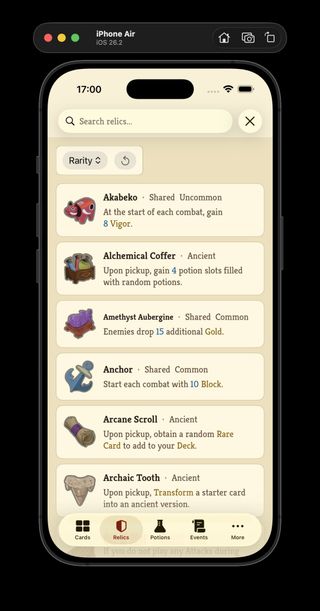
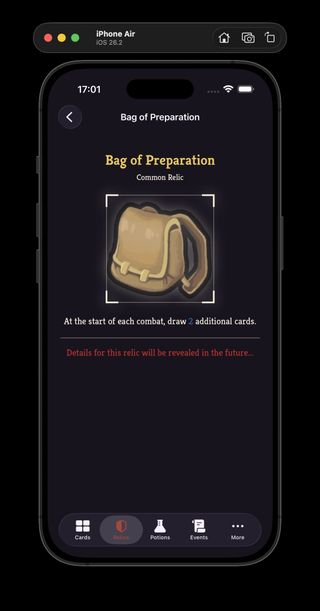
Parsed relic catalog data flowing into the Neow's Cafe relic list and detail views.
I shipped the past couple of days of ProjectSpire work as Neow's Cafe v0.4.0, Catalog Service v0.4.0, and Parser Service v0.3.0. The old card-only parser and catalog names are now broader services, the parsers cover relics, potions, events, and monsters, and Neow's Cafe has live relic list and detail screens backed by the generated catalog instead of mock data. This is the first point where ProjectSpire feels less like a card browser and more like the start of a full Slay the Spire reference app.
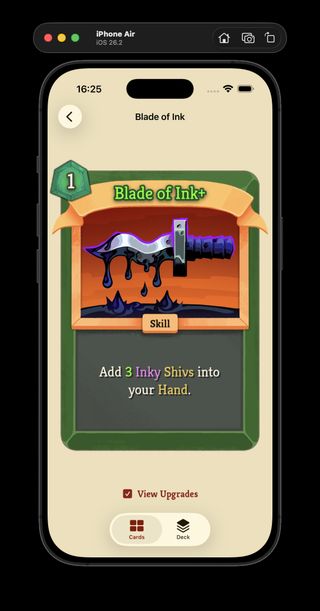
Blade of Ink now rendering its purple description text correctly.
I shipped a tiny Neow's Cafe v0.3.1 bug fix in ProjectSpire: purple was missing from the mapped text colors, so purple inline card text had nothing to resolve to. Now purple is part of the text color map, and cards like Blade of Ink can render their description highlight properly.
Colored description text flowing from the catalog into Neow's Cafe card details.
I shipped a small combined ProjectSpire release: Card Catalog v0.3.0 and Neow's Cafe v0.3.0 now carry colored inline description text through the catalog and into the SwiftUI card views. The visible change is small, but it closes the loop from parsed game text to rendered card detail: upgraded values and highlighted terms now show with the same kind of color signal the game uses.
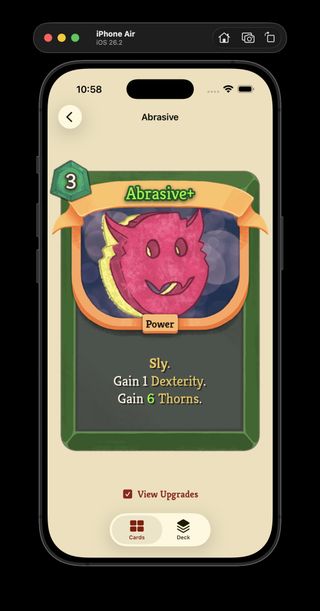
The catalog JSON now carries upgraded card values, and the app has a proper detailed card view where I can inspect those upgrades instead of only browsing the cards in their base form in the grid.
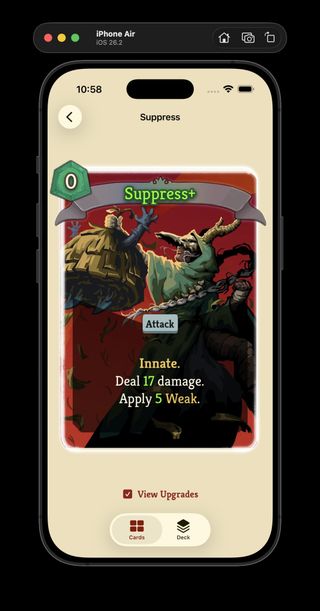
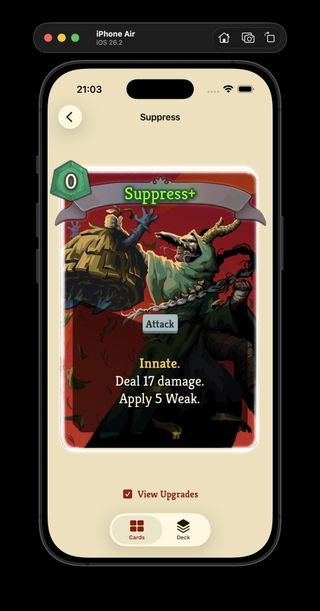
In the game, the numbers (17 and 5) in the text, would be highlighted with the color being green, because they are the upgraded from base values. That is next on my todo list.
Supress in the new detail view, with upgraded card data exposed from the catalog.
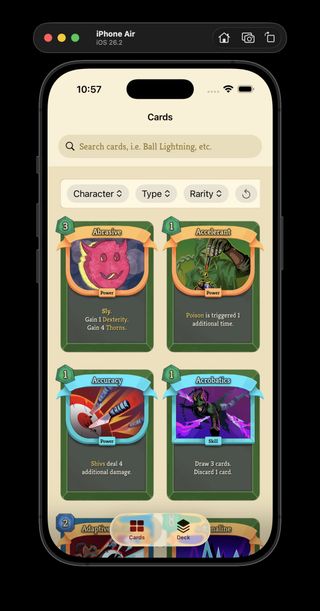
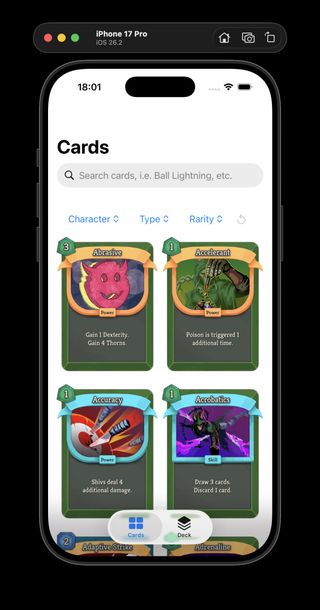
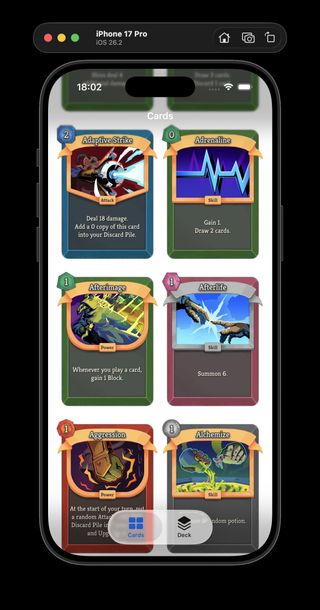
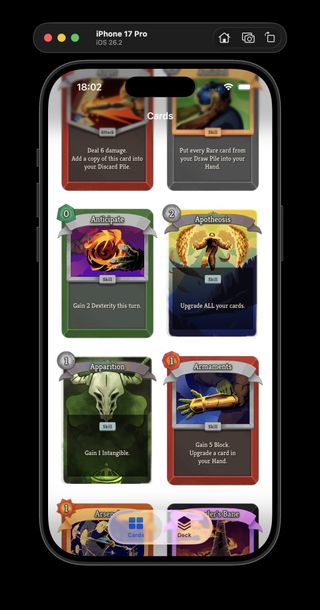
Neow's Cafe browsing catalog-backed card data instead of bundled mock cards.
I spent today turning ProjectSpire's iOS app "Neow's Cafe" from a mock-card browser into something much closer to a real Slay the Spire 2 card catalog.
The main decision was to keep the first version boring in the best way: a static, versioned catalog generated from the game data, served locally, and loaded directly by the app instead of inventing a REST API too early.
That structure gave the app one small index for browsing and filtering, while keeping full per-card files and portrait assets nearby for detail/debug views later. The important bit is that the card grid does not need to fetch hundreds of separate files just to show the collection.
		`cards.index.json` is the grid, search, and filter payload. It contains all card summaries needed by the app:

- id
- slug
- title
- description
- energy cost
- type
- rarity
- pool
- portrait path
- optional detail path

Keep individual card JSON files for detail and debug views, not for the main grid.
On the Swift side, CardCatalogService.swift now loads manifest.json, follows it to cards.index.json, and decodes the catalog into app cards. I also removed the old bundled sample portraits, so the app is now much more dependent on the generated catalog behaving like the source of truth.
The Cards screen got some polish too: the catalog can be refreshed from the view, the grid is now a two-column layout that preserves the card aspect ratio in CardsView.swift, and I cleaned up the filter model so "no filter" is represented by optional UI state instead of fake .all enum cases (filter cleanup commit).
The other nice bit from today is process-oriented: ProjectSpire now has Captain Logs for collaboration notes and a reusable workflow for turning a day's commits and documentation changes into these timeline summaries. That should make it easier to keep writing about the work without having to rediscover the shape of the day from raw git history every time.